orthbiologic treatment

Fat Pad Atrophy Treatment

Restoring comfort when the natural cushioning of your foot wears down
Fat Pad Atrophy is Now Treatable With Regenerative Medicine
Fat Pad Atrophy

Fat Pad Atrophy: A Common and Painful Condition

Fat pad atrophy is a common yet underdiagnosed condition that can cause significant discomfort in the heel or ball of the foot. Often mistaken for other foot ailments, it involves the thinning of the protective fat layer under the foot, leading to pain and sensitivity, especially on hard surfaces.

When this happens, everyday activities like walking or standing can become painful, often described as feeling like you are “walking directly on bone.” At The Center for Morton’s Neuroma, we offer non-surgical options to help restore comfort and reduce pressure: hyaluronic acid (HA) filler injections and orthobiologic treatment using a patient’s own fat. Both are designed to improve cushioning in high-stress areas of the forefoot

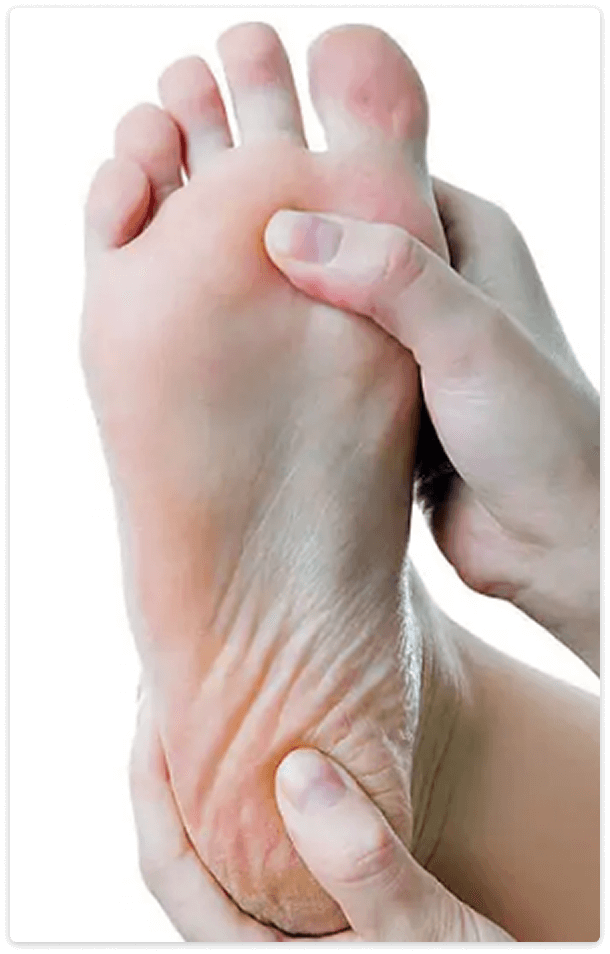
The ball of your foot is designed to absorb shock with every step. A specialized layer of fat and connective tissue—known as the forefoot fat pad—acts as a natural cushion beneath the metatarsal heads. Over time, this padding can thin or shift, a condition commonly referred to as forefoot fat pad atrophy.
 

fat-pad-loss-image

What is fat pad atrophy?

Fat pad atrophy is fat tissue breakdown that does not repair or reverse with time. This results in foot bones that are closer to the floor, not as protected, and in more pain. This thinning exposes the underlying bones to stress and impact, leading to discomfort and potential damage.
Patients with Forefoot Fat Pain Atrophy complain of pain in the ball of the foot or pain under the metatarsal heads when walking on a hard surface.

Burning, aching, or sharp pain in the ball of the foot

A “stone bruise” or pebble-like sensation under the toes

Pain that worsens with prolonged standing or walking

Callus formation beneath pressure points

Neuroma-like symptoms caused by mechanical overload

Patients with heal Fat Pain Atrophy of pain under the heel while walking barefoot on a hard surface or pain. . It feels like a dull ache in the center of the heel and it may be possible to feel the heel bone with your fingers through the fat pad. If it feels like hardly any cushion, atrophy is more likely than fasciitis. Frequently the pain in your heel is worse the more you walk on it.
Why do you get fat pad atrophy?

Fat pad atrophy may develop due to aging, foot structure, high-impact activity, prolonged standing, prior foot procedures, or repeated steroid injections. In high arched people, chronic stress over the fat pad can also cause it to shift forward and degenerate. Acute injury, diabetes or smoking can also cause or contribute to Fat Pad Atrophy.
Many patients come to see us with Fat Pad Atrophy after having received corticosteroid injections for their Morton’s neuroma for the temporary relief of pain. However, these corticosteroid injections have a significant risk of resulting in fat pad atrophy, especially if they have been repeated a few times. Cortisone interferes with the body’s natural healing processes resulting in tissue and fat pad breakdown.

Let's get started

Schedule a consultation with our specialists to learn more about managing this condition.

Fat Pad Atrophy Treatment

We offer a range of non-surgical and surgical treatments to manage fat pad atrophy effectively.


1

Simple Treatments

Custom Orthotics

Specially designed shoe inserts help redistribute pressure and provide much-needed cushioning.

Silicone Heel Pads

These gel-based pads offer immediate relief by cushioning the affected area and reducing pressure on the heel.

Physical Therapy

Strengthening the muscles in your feet and ankles can help support the fat pads and alleviate pain.

2

Medium Term Solutions

Hyaluronic Acid Injections

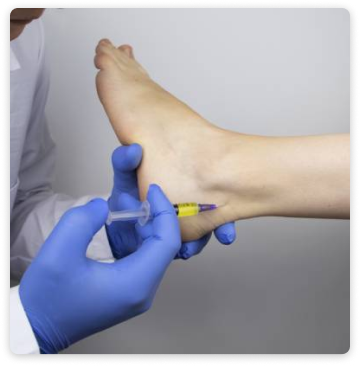
When carefully injected into targeted areas of the forefoot Hyaluronic acid can act as a shock-absorbing layer, helping redistribute pressure away from painful metatarsal heads. This provides medium term pain relief.

3

Long Term Solutions

Autologous Fat Graft

Until recently, we had no longer term solution to offer. We now have a Regenerative Medicine solution to build up your fat pads in your feet. Recent studies show that taking a small amount of your own fat from an area, like the buttock or thigh, and putting it back into the ball of your foot can have a long term, positive effect to repair the fat atrophy and restore comfort and function. This minimally invasive procedure can provide excellent long-term relief.
Let's get started

Contact Us To Find The Right Treatment Plan For Your Needs.

Hyaluronic acid vs. Autologous Fat Graft

When exploring options for fat pad atrophy, patients often ask about the difference between hyaluronic acid filler and orthobiologic treatment using their own fat (commonly called fat grafting or fat transfer). While both aim to improve cushioning, they are very different treatments.
Hyaluronic-acid-HA-filler-image

Hyaluronic acid (HA) filler

Hyaluronic Acid filler is a synthetic, biocompatible gel placed precisely beneath high-pressure areas of the forefoot.

Key Features

Injection-only procedure performed in the office

No harvesting or donor site required

Highly controlled and predictable placement

Immediate cushioning and pressure redistribution

Gradually absorbed by the body over time

Mild to moderate fat pad thinning

Patients seeking a non-surgical option

Minimal downtime and rapid return to activity

Patients who prefer a reversible, temporary solution

Autologous Fat Graft

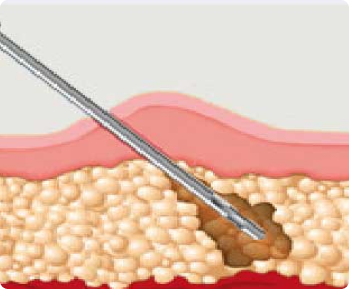
We extract a small amount of fat from your abdomen or buttocks and, after minimally processing, we inject it into your foot using ultrasound guidance. This has a long term positive effect to repair the fat atrophy and restore comfort and function. 

Autologous Fat Grafting uses your body’s own fat and self-healing processes leading to long term symptom relief and recovery of function.
Key Features

Uses the patient’s own tissue (autologous)

Requires a harvesting procedure

Highly controlled and predictable placement

Provides important biological signaling in addition to volume

Volume retention is good although some transferred fat is commonly reabsorbed

Can have excellent long term results

Patients with more advanced volume loss

Patients willing to undergo a more involved procedure

Longer term, more permanent result desired

Why these approaches are not interchangeable

Although both treatments aim to improve cushioning, they differ in recovery, and durability.

Feature Hyaluronic Acid Autologous Fat Graft
Source
Synthetic, biocompatible gel
Patient’s own tissue
Procedure
Injection only
Harvest and injection
Downtime
Minimal
Greater
Longevity
Temporary
Can be significant
Surgical component
No
Minimal
Results Guaranteed
No
No

What to expect at your visit

Comprehensive evaluation

We begin with a focused clinical exam and assessment including ultrasound imaging to confirm and measure fat pad atrophy or identify additional contributors to pain.

Personalized treatment plan

If HA or orthobiologic cushioning is appropriate, we design a targeted plan based on pressure distribution and foot structure.

In-office procedure

Both HA and orthobiologic treatment using a patient’s own fat are typically performed in the office under ultrasound guidance with attention to comfort and precision.

Autologous Fat Grafting : Treatment and Recovery

We first examine and evaluate your feet and confirm the diagnosis and make sure that you are a suitable candidate. Then we do a mini liposuction taking a very small amount of your own fat from your buttocks in a painless procedure under local anesthesia. We then process your fat here on site. Once we have the fat processed, we inject the fat into your fad pad area under ultrasound guidance as needed. The whole process takes about 1-2 hours.
Recovery can take a week and then we recommend you walk minimally for the first 4-6 weeks. Forefoot offloading shoes and Custom Orthotics can help the healing and recovery.

Let's get started

Explore advanced treatment options for Fat Pad Atrophy.

FAQ's

Frequently Asked Questions

What is the best treatment for fat pad atrophy?

A: Autologous Fat Pad Grafting. We can treat Fat Pad Atrophy with your own fat extracted from a mini liposuction done on your abdomen or buttocks, then processed and injected into your feet in an orthobiologic treatment.

A: No, we only do one for the time. If you need both feet then then we do your second for at least one month after the 1st foot.

A: Walk only as needed for the first three days. Using crutches is preferable. Within the next two weeks, you can walk but keep your foot elevated whenever you can. For the first 4 to 6 weeks:
  • No barefoot walking and only minimal walking.
  • Use a scooter if possible.
  • Cannot work or walk full-time on your foot.
  • Use towels placed on the shower floor or a shower pad when showering.
A: You should notice a change within the first six months, and this will continue to improve for two years thereafter.
A: While the condition does not reverse, symptoms can be managed in the short term with proper care and custom orthotics.
A: Fat pad atrophy causes pain under the heel, while plantar fasciitis typically causes pain in the arch and heel, especially after resting. Sometimes it can be very difficult to distinguish between the two and you should seek a provider who has a lot of experience in dealing with these two conditions to make an accurate diagnosis.
A: Surgery is rarely required and is usually reserved for very severe cases.
A: Shoes with thick, cushioned soles and proper arch support are ideal.

References

Recent studies highlight the effectiveness of fat pad augmentation in the treatment of Fat Pad Atrophy.

Lipofilling for functional reconstruction of the sole of the foot. Nicoletti G; et al;  Foot (Edinb). 2014 Mar;24(1):21-7.  doi: 10.1016/j.foot.2014.02.003. Epub 2014 Mar 6.
Link to Article

Autologous Fat Grafting for Pedal Fat Pad Atrophy: A Prospective Randomized Clinical Trial; GusenoffJ et al; Reconstr Surg. 2016 Nov;138(5):1099-1108.
Link to Article

Fat Grafting for Pedal Fat Pad Atrophy in a 2-Year, Prospective, Randomized, Crossover, Single-Center Clinical Trial; Minteer et al; Plast Reconstr Surg. 2018 Dec;142(6):862e-871e.
Link to Article

Get Your Free Morton’s Neuroma Guide:

Mortons Neuroma Guide
The top 10 signs you may have Morton’s neuroma and
The top 10 things to do if you think you have Morton’s neuroma

By providing us with your information you are consenting to the collection and use of your information in accordance with our Terms of Service and Privacy Policy.